Adrian Harris Studio · Photography portfolio website · Lansing, Michigan

Two ways of seeing.
One website.

Adrian Harris is an artist and a working photographer. We built him a site that shows both sides of his work, and lets each one do its job.

Photograph: Adrian Harris

Client
Adrian Harris Studio, LLC
Where
Lansing and Mid-Michigan
Live
October 4, 2026
Built to
WCAG 2.2 AA
See it
adrianharris.studio

At a glance

3numbered art series
70photographs of his own work
106client photographs, from three shoots
0passwords for his clients to remember

The win: an artist's portfolio that also brings in paid work, without ever reading like a sales page.

The challenge

An Instagram link, and two kinds of work

  • Before October, adrianharris.studio just forwarded to Instagram.
  • Instagram is good for sharing photos. It can't explain the work he takes on, or give a client a private place to see their shoot.
  • Adrian makes two kinds of work: his own photographs, and assignments for businesses, events and families.
  • The two pull in different directions. Art wants silence. Paid work needs a clear way to ask.

The turn

One eye, two doors

His art and his assignments aren't two businesses. They're the same eye, pointed at different things.

So the site wouldn't choose. Each kind of work gets its own door, and visitors feel the connection.

"Two ways it comes to be — on my own, and on assignment."

Adrian, on his Work page

How we got there

Four decisions that shaped the site

01

Let the photographs carry every page

The decision

A dark, quiet design with very little type. No banners, no badges.

Why

The work is the proof. Anything else on the page competes with it.

What it led to

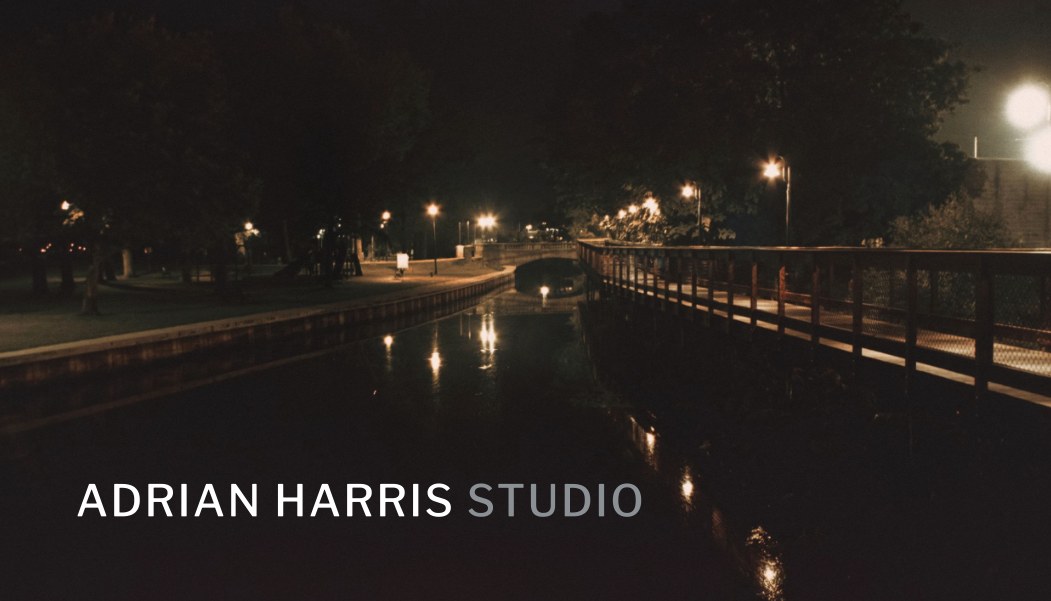
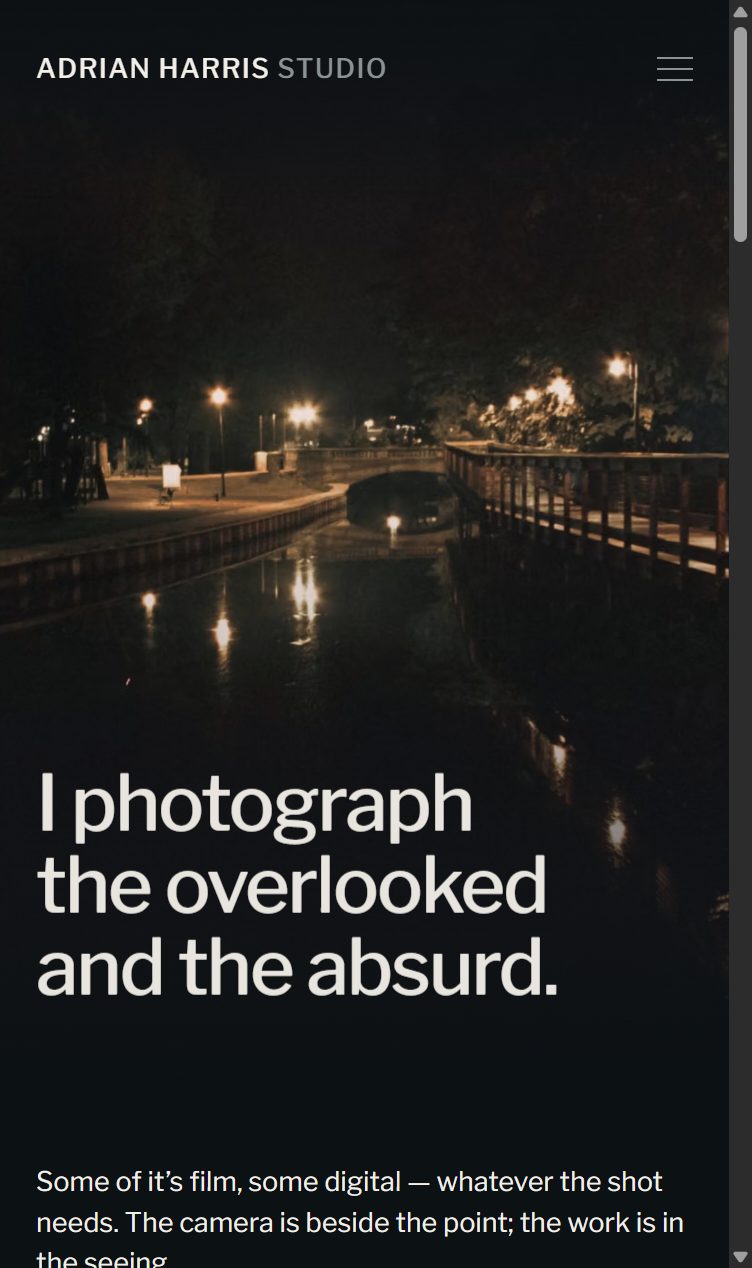
The home page opens on his canal at night, full screen. You know his eye before you read a word.

02

Number the art. Never title it.

The decision

Each photograph gets a permanent catalog number, like III.24. A series closes once it's published.

Why

Adrian doesn't title his photographs. Numbers respect that, and give each frame a lasting name.

What it led to

Three series and 70 photographs, each easy to cite, order or ask about.

03

Ask for work without breaking the mood

The decision

Every client page ends with a short note in Adrian's voice: "I take on assignments."

Why

A "book now" button would cheapen the art. A plain invitation doesn't.

What it led to

The site asks for paid work on every client page, and still reads like an artist's portfolio.

04

Make every printed piece lead somewhere on purpose

The decision

Every QR code he prints points to a short address on his own site. That address sends people to the right page and counts each scan.

Why

Print lasts. Where it points shouldn't be stuck.

What it led to

A week after the cards were ordered, their QR code moved to his client work. No reprint.

Inside the site

Step into his world

Five threads run through the site. Each shows a different side of Adrian: the artist, the working photographer, the careful technician.

The artist

On My Own

His own work, shown the way he sees it.

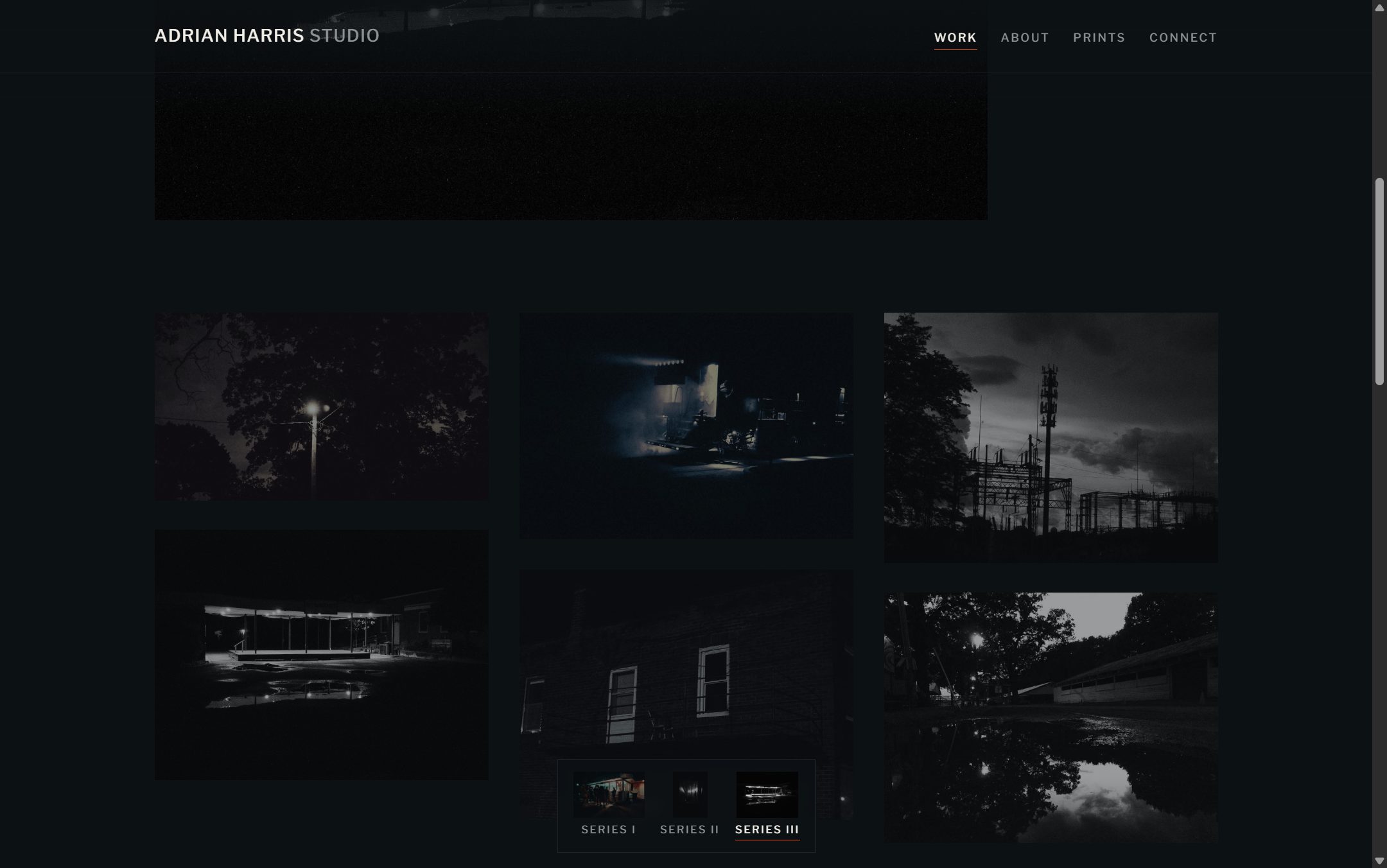
  • Three series of untitled, numbered photographs.
  • Each series opens on the frame that sets its tone.
  • The art is shown clean, with nothing over it.
  • Visitors move between series without going back to a menu.
adrianharris.studio/work/on-my-own/iii
Series III on adrianharris.studio: untitled photographs laid out with their catalog numbers.
Series III. Each frame keeps its number for good.

The working photographer

On Assignment

The same eye, turned toward what matters to his clients.

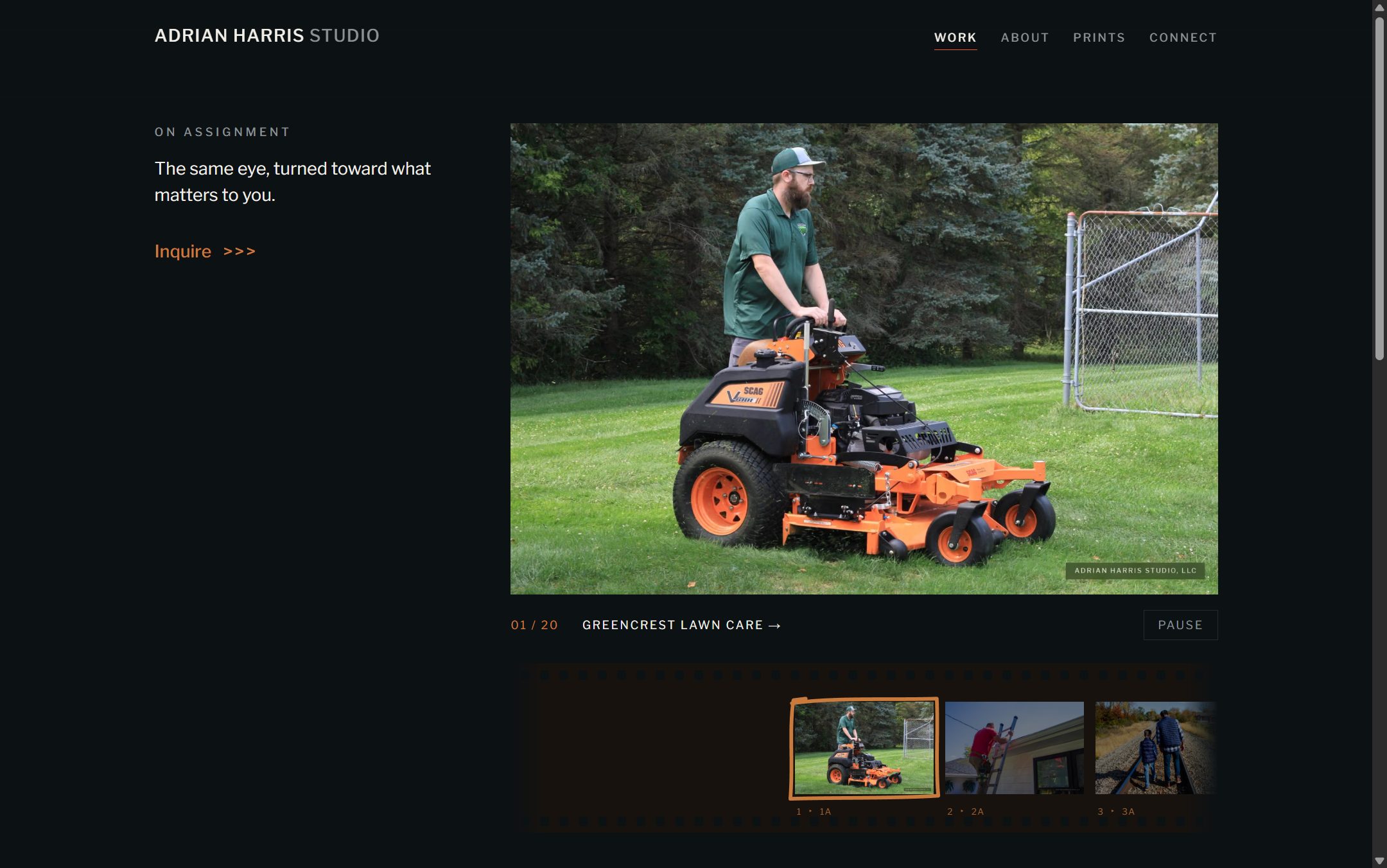
  • Client work is grouped by client, with each town and month.
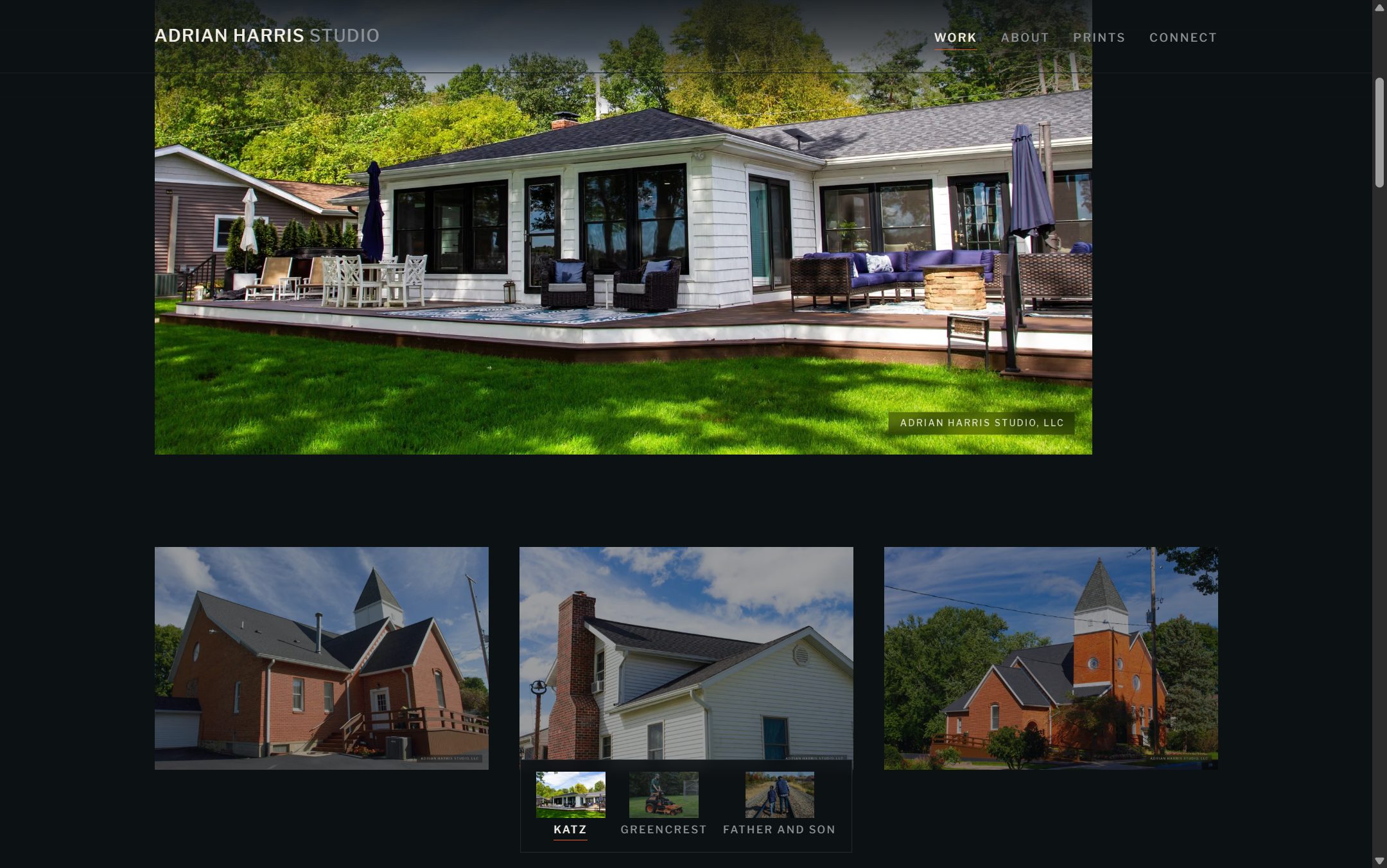
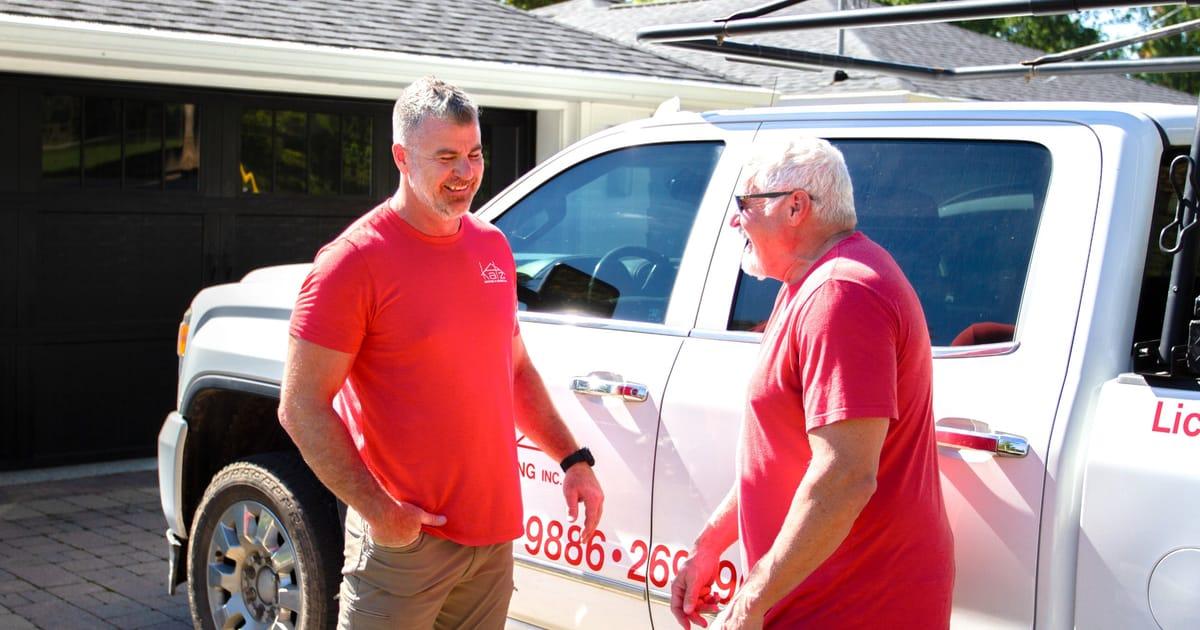
  • Katz Roofing and Siding and Greencrest Lawn Care agreed to be named.
  • Family shoots are shown, but families are never named.
  • A strip of frames moves across the page until you touch it.
  • Client photographs carry his watermark. His own work doesn't.
adrianharris.studio/work/on-assignment
The On Assignment page: a moving strip of client photographs and a list of clients with their towns and months.
adrianharris.studio/work/on-assignment/katz-roofing
Adrian's photographs of the Katz Roofing and Siding crew at work.
Katz Roofing and Siding, Potterville. September 2026.
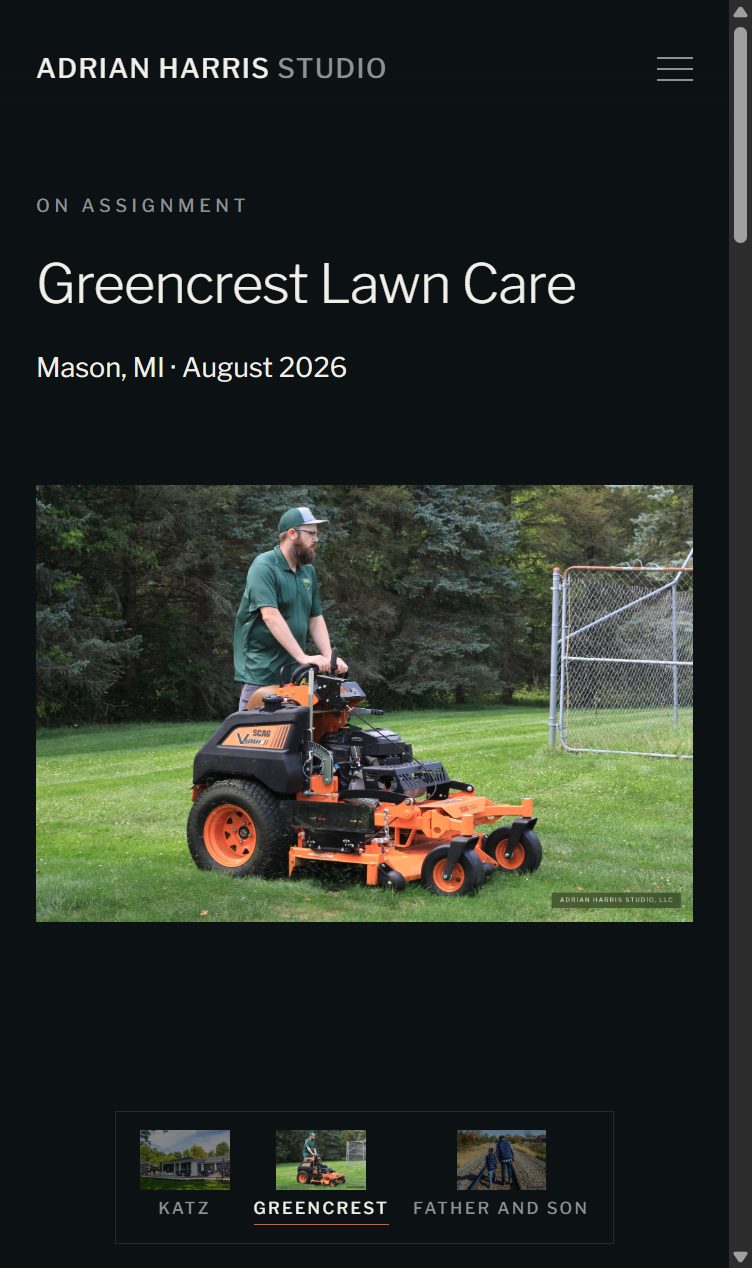
The Greencrest Lawn Care client page on a phone.
Greencrest Lawn Care, on a phone.

The careful technician

Private galleries

Delivering a shoot is part of the craft, so it lives on his own site.

  • Each shoot gets its own private gallery.
  • Clients sign in with a code sent to their email. No password to lose or share.
  • They pick favorites, leave notes, and invite family to look.
  • Finished files unlock once Adrian approves them.
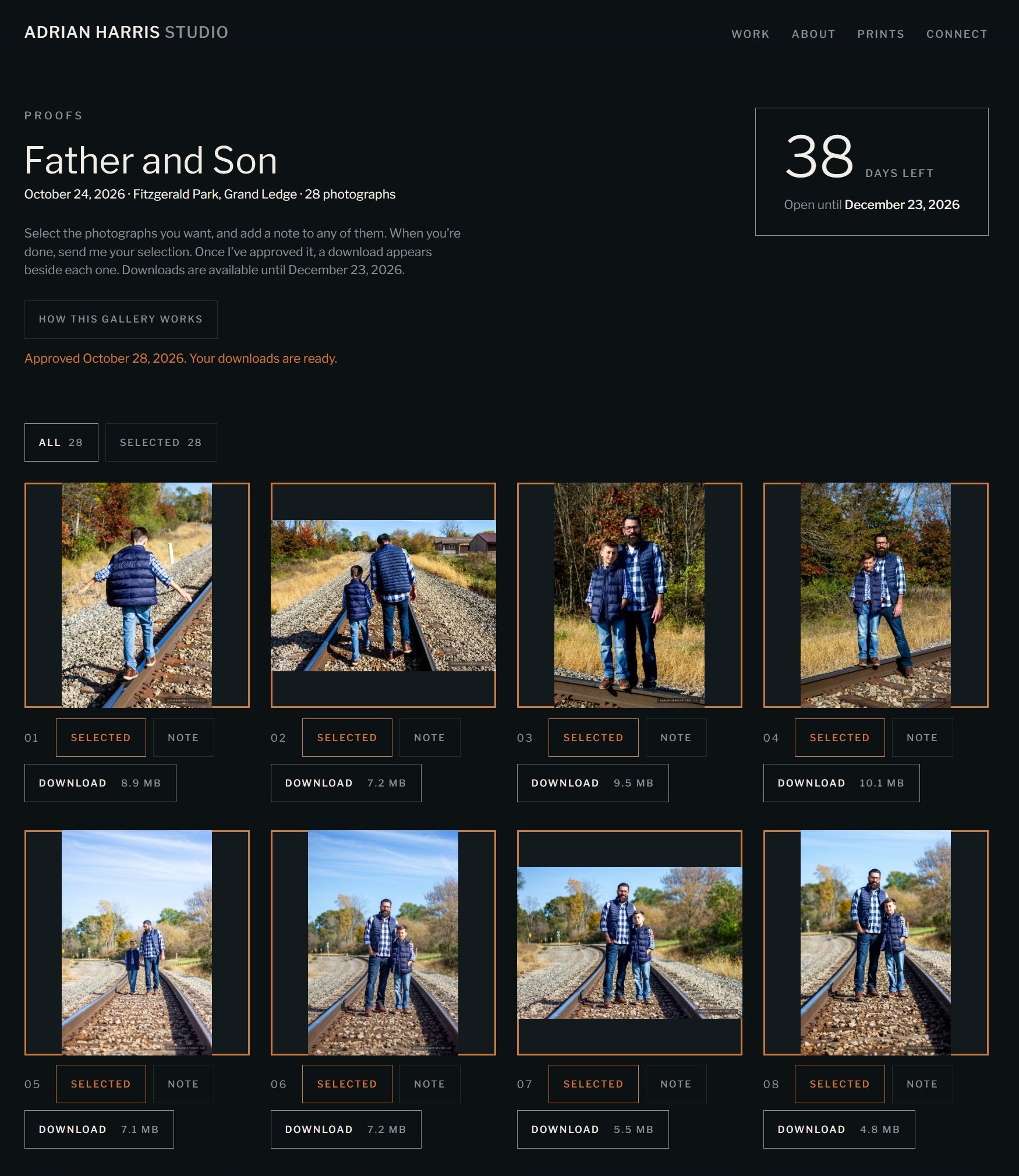
  • Paste a gallery link into a text or email, and the preview shows no photos. A family's pictures stay private.
adrianharris.studio/proofs/…
A private gallery on adrianharris.studio: a father and son's shoot at Fitzgerald Park in Grand Ledge, 28 photographs, a countdown showing 38 days left, and every photograph selected with its download ready.
A family's private gallery: picks made, approved, and ready to download.

Beyond the screen

Print and social that lead back

Most of his work starts with a conversation. Everything he hands out leads to the right page.

  • The card. A sample of the work on one side, every way to reach him on the other.
  • A holiday offer page. Reached only by a printed QR code and kept out of search. It can end without touching the rest of the site.
  • A print for a salon counter. It reads Anytime Portraits, so it outlasts the season.
  • Facebook and LinkedIn. The same photographs, type and colors as the site.
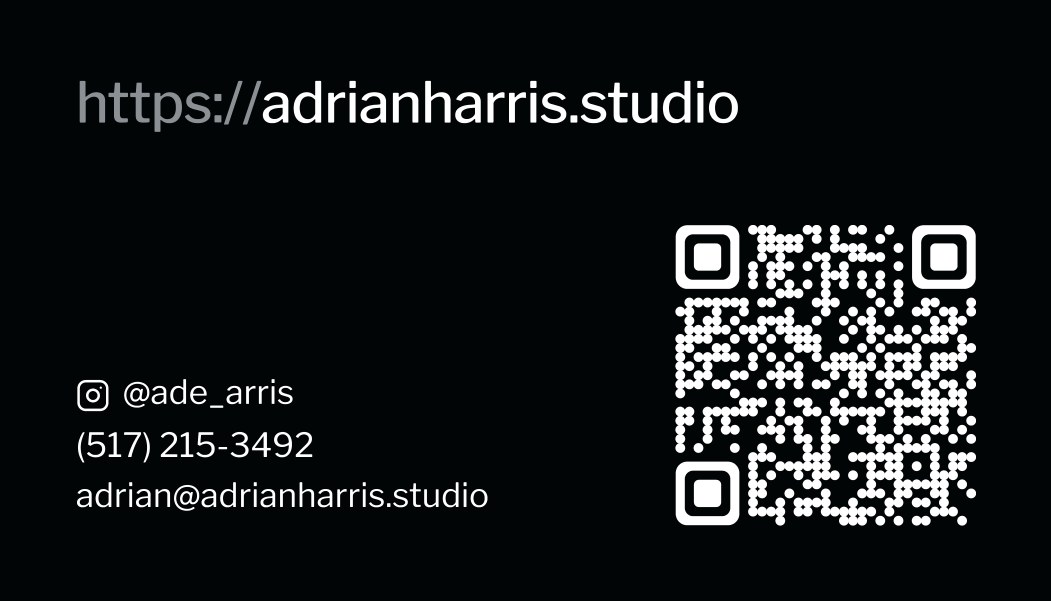
The front of Adrian's business card: his canal photograph, edge to edge. The back of the card: his web address in large type, Instagram, phone, email and a QR code.
The front is the photograph his site opens on. The QR code runs through his own site, so it can move, and it counts.
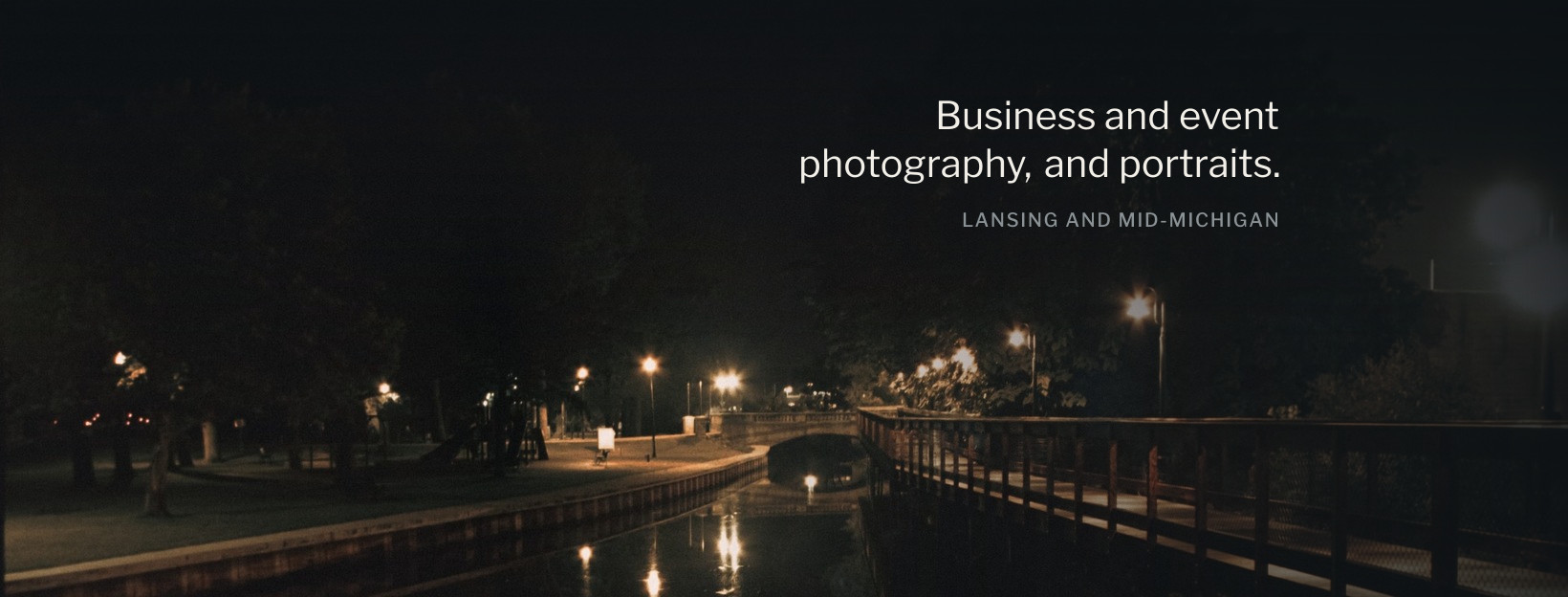
The Adrian Harris Studio Facebook cover: the canal photograph with the studio name.
His Facebook cover matches the site and the card.

What's next

A site that grows with him

  • New work is on the way, and it slots right in.
  • A new client becomes a new page.
  • A new print run gets its own QR code, counted from the first scan.
  • When the holiday offer ends, its QR code points somewhere new.
  • Every scan and inquiry is counted, so the next step is measured, not guessed.
The adrianharris.studio home page on a phone.
You set the direction: what the photographs are for and how they should feel. I give them character. Adrian Harris, on his client pages

Common questions

What photographers ask us about their websites

What should a photography portfolio website include?

Your best work, grouped the way you think about it, a clear path for people who want to hire you, a way to reach you on every page, and photographs that load quickly at full quality. Adrian's site keeps his own art and his client work apart, so each visitor finds what they came for. See what we build.

Is Instagram enough, or does a photographer need a website?

Instagram is a good place to be seen. A website is a place you own: your work in the order you choose, private galleries for clients, and pages people can find in search. Adrian's started as a link on Instagram and became the place everything points to. See what we build.

How do private client galleries work?

Each shoot gets its own gallery on the photographer's site. Clients sign in with a code sent to their email, pick favorites, leave notes and invite family to look, and the finished files unlock once the photographer approves them. Here's how we work.

Can a portfolio website stop people from saving my photos?

No website can stop it completely. What it can do is show photographs at screen size rather than print size, make saving them harder, and put a watermark on client work. Adrian's own art is shown clean; his client work carries his watermark. See what we build.

Your work deserves a site that sounds like you.

Let's talk about what yours should say.

Start a conversation

more catches

More catches

Two more stories of the sites we've built, and the people who run them.